
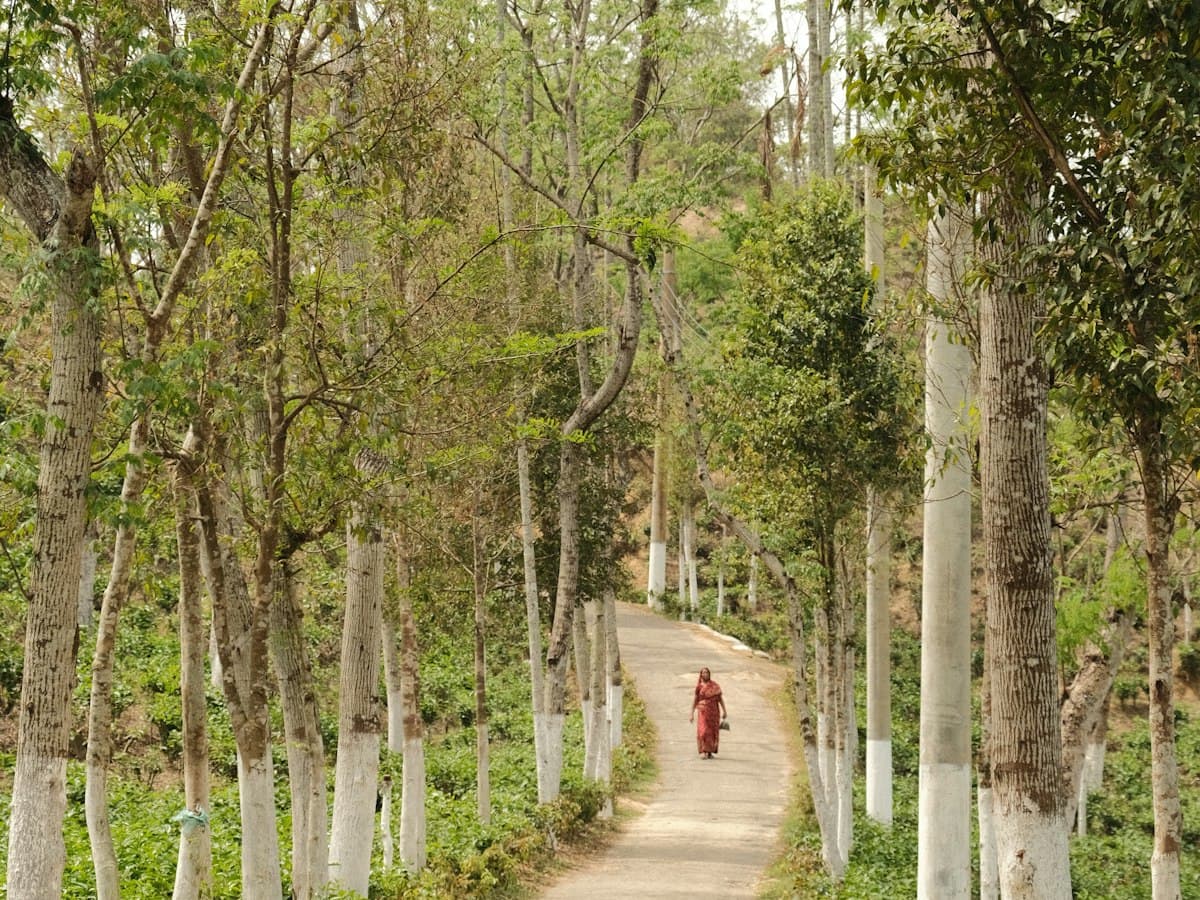
Illustrative photo

Barguna, Barishal

Haringhata Forest

A coastal forest at the mouth of the Bishkhali and Baleshwar near Patharghata, with walkways through the trees and a quiet beach beyond.

Local food to try

  • Fresh fish

    Haringhata Forest

    Hilsa and sea fish in Patharghata’s local hotels.

  • Shutki

    Haringhata Forest

    Dried fish from the winter yards around Patharghata.

Where to eat

  • Illustrative photo

    Patharghata bazar

    Patharghata

    Simple hotels serving the day’s catch.

    Open in Google Maps (opens in a new tab)

Where to stay

  • Illustrative photo

    Barguna town

    Barguna Sadar

    Most travellers visit Haringhata on a day trip from Barguna.

    Open in Google Maps (opens in a new tab)
  • Illustrative photo

    Patharghata

    Barguna

    A few basic hotels; check locally.

    Open in Google Maps (opens in a new tab)

History

Haringhata lies at the southern tip of Patharghata upazila, where the Bishkhali and the Baleshwar reach the sea. Its forest of mangrove and planted coastal trees has been developed by the Forest Department as an eco-park, with raised walkways and viewpoints.

The name means “deer ghat”. Beyond the trees lie open sand and the sea, with fishing boats from Patharghata passing offshore.

It makes an easy outing from Barguna, combined with a look at the busy fish landing at Patharghata.

Tour plans

Haringhata and Patharghata

One day
  1. Step 1: Morning: to Patharghata

    Leave Barguna early by bus or CNG.

  2. Step 2: Haringhata forest

    Walk the forest walkways while it is cool, watching for birds.

  3. Step 3: The beach

    Walk out to the open shore at the river mouth.

  4. Step 4: Lunch and the fish landing

    Eat fish in Patharghata and look at the trawlers unloading, then return to Barguna.

Plan your visit

Best time to visit

November to February; mornings for birds

How to get there

From Barguna town take a bus or CNG to Patharghata, about 1–1.5 hours, then an auto-rickshaw or motorbike to Haringhata.

Travel tips

  • Stay on the walkways and marked paths; the mud is deep at low tide.
  • Keep noise down if you hope to see birds and other wildlife.
  • Carry water and insect repellent.
  • Do not swim off the beach in rough water.
  • Check locally whether any entry ticket applies.

Discover